
WARDOGS vehicles and combined arms
WARDOGS vehicles and combined arms
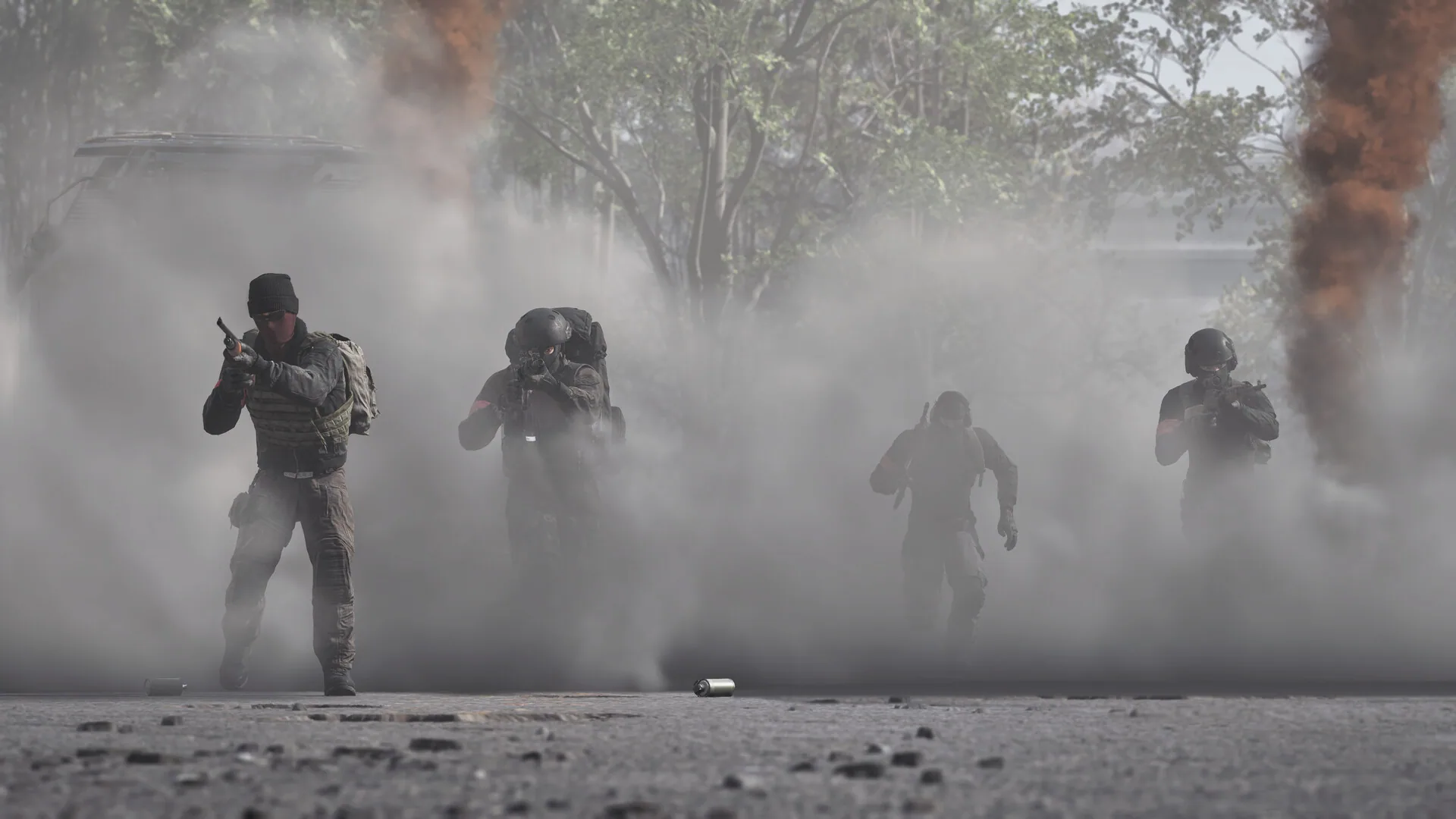
Combined Arms is the WARDOGS system where movement, fire, terrain and team responsibility overlap. The public record names helicopter transport, Littlebird movement, tanks and artillery tanks alongside tactical gunplay, building and destruction. These are confirmed roles, not a complete vehicle catalogue. Read them as ways to change a team’s route to the Control Zone, then pair each vehicle with infantry who can turn access into score. The useful test is always the receiving task: a vehicle matters when it delivers observation, pressure, recovery or objective presence at the moment the squad can use it.
STRUCTURED VEHICLE RECORD
Confirmed vehicle roles
| Vehicle | Role | Official context |
|---|---|---|
| Helicopter | Transport and mobility | Official helicopter transport example |
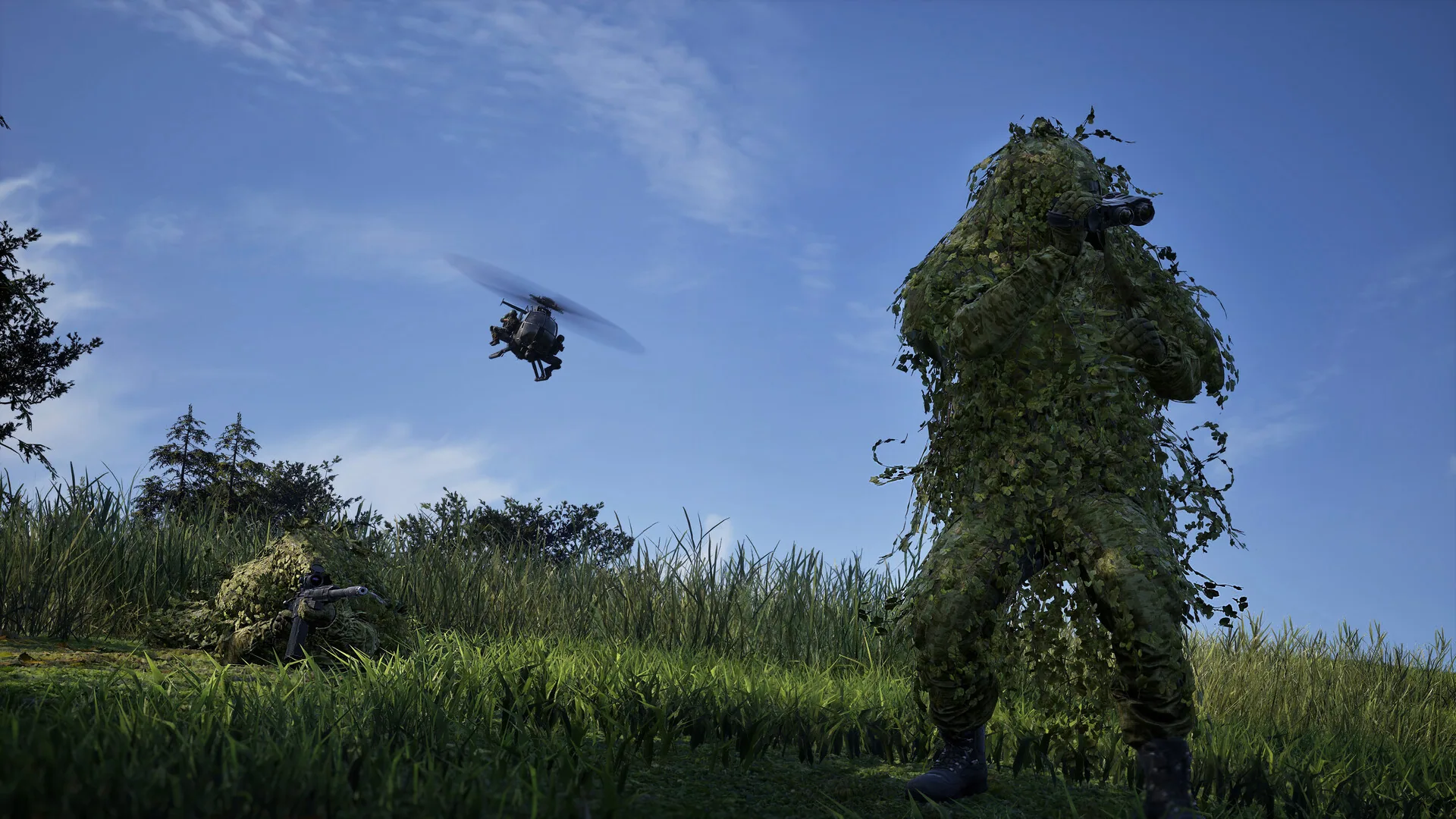
| Littlebird | Light air transport | Official light transport example |
| Tank | Ground fire | Official ground-fire example |
| Artillery Tank | Long-range fire example | Official artillery tank example |
Movement is the first vehicle advantage
A vehicle matters because it changes when and where a team can act. Helicopter transport is listed as a way to move players and supplies, while the Littlebird is presented as a light air-transport example. That distinction gives a squad two different questions: does the group need to arrive with capacity and protection, or does it need a faster link between separated points? A pilot who answers the route question can help before a weapon is fired.
Control Zone creates the timing that makes transport valuable. The active area is randomized and described as 2x2 km, but the wider battlefield reaches 256 km². Infantry can spend too long crossing open ground, while an aircraft can compress that distance and place a squad near a useful approach. The vehicle still needs a landing or drop decision, local information and a team ready to move on arrival. Speed without a receiving plan only relocates the problem.
The best vehicle call is therefore concrete: where are the teammates, where is the next objective, and what route will remain after arrival? Local Voice Chat can carry that short call to nearby players, while a visible squad movement can confirm it when the radio is quiet.
Fire support changes the shape of a lane
Tanks and artillery tanks are the confirmed ground-fire examples in the structured record. The Tank is associated with ground fire, while the Artillery Tank is named as a long-range fire example. Those labels are enough to understand the relationship with infantry without assuming armor values, ammunition counts or a final vehicle roster. A ground-fire platform can make an approach possible, but infantry still has to see, occupy and hold the important area.
The battlefield is described through construction and destruction as well as combat. A damaged structure can change a sightline or route, and a built forward position can give a squad a place to recover and coordinate. Fire support is strongest when it changes that relationship: it can create pressure on a position, protect a crossing, or force the opposing team to move before the next Control Zone contest.
A vehicle crew should measure success in team movement. If the squad cannot advance, the fire has not yet solved the problem. If a protected lane lets infantry arrive in time to contest majority control, the platform has created value even when its own score is not the most visible number.
Infantry is the receiving end of mobility
Combined Arms does not make infantry a passenger category. A transported squad must know where to look, which route to secure and what action follows the landing. An observer can identify the next danger, a support player can keep the group active, a builder can establish a forward point, and an objective player can turn access into score. The vehicle solves distance; the people solve the local problem.
This is why the roles overlap. A pilot can also be an information source about the terrain, a builder can prepare a receiving position, and an observer can choose a route that does not expose the transport to unnecessary fire. The public product language emphasizes player choice and a sandbox without fixed rules of engagement. The record therefore describes responsibilities rather than a forced team composition.
Use the Squad Roles route after reading the vehicle table. Pick a pairing for the next session: helicopter plus objective runner, tank plus infantry observer, or artillery tank plus a builder who can protect the firing position. The pairing gives a vehicle action a measurable team result.
Terrain and destruction are part of the vehicle record
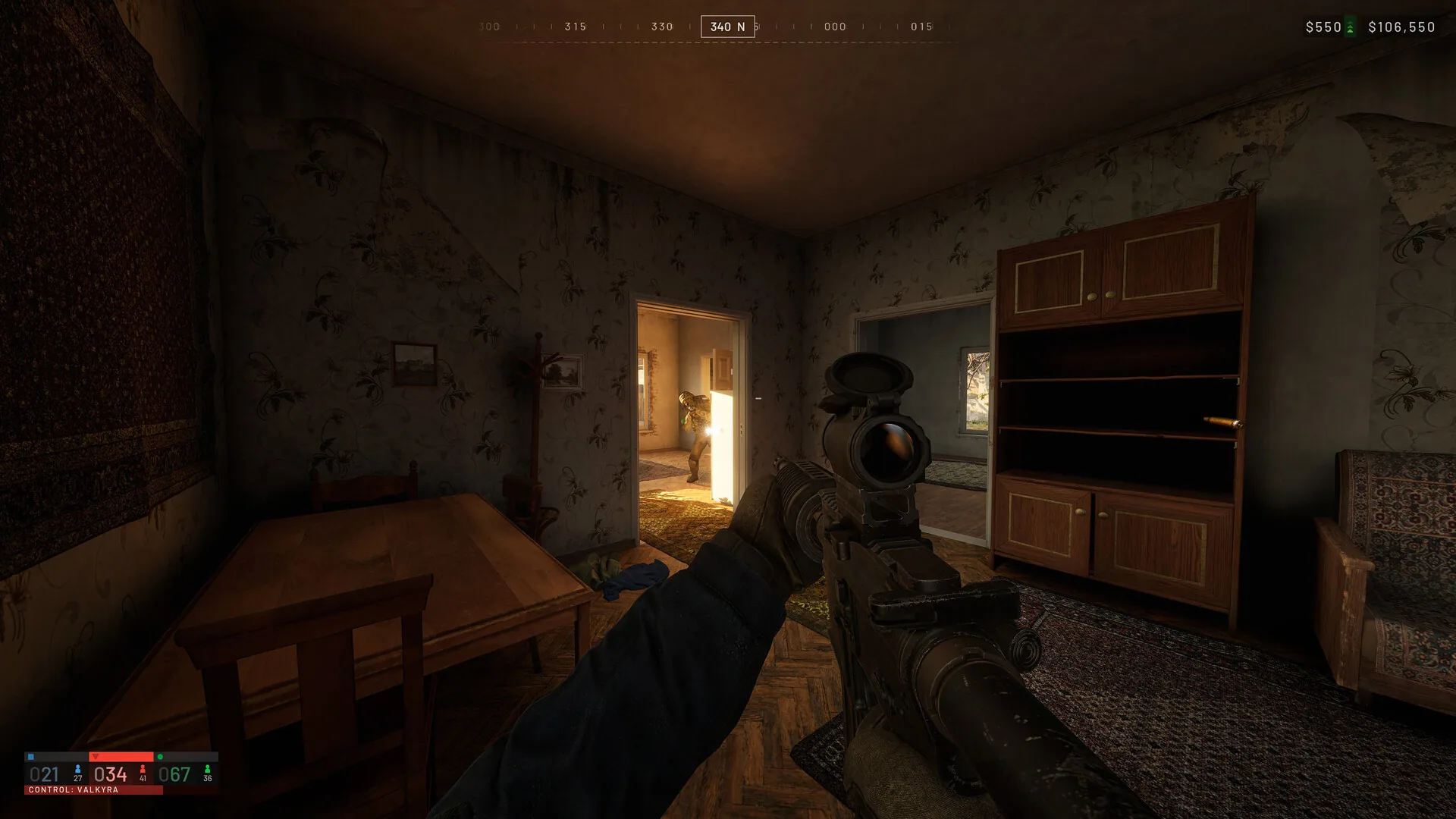
A vehicle route is never only a line between two points. The official image set shows mountain, industrial and damaged-building environments, while the public facts describe destruction that can alter routes. That makes the same transport decision different from one match to another. A landing that works beside an intact structure may fail after a route has been opened or a piece of cover has disappeared.
Terrain also changes the value of fire support. A long-range platform needs a position that can see the relevant approach, while an infantry squad needs a way to reach the objective without becoming isolated. The 256 km² battlefield is a context for those choices, not a promise that every location is available in every match. Read the live environment and use the confirmed scale to think about logistics.
Construction adds a forward answer. A built FOB or position can turn a vehicle delivery into a repeatable route, giving the team somewhere to regroup after a life. The combination of build, destroy and move is the distinctive part of the system: the battlefield is not just a backdrop for a vehicle list.
A vehicle crew’s match questions
Before moving, name the objective, the passengers and the fallback. During the route, identify whether the vehicle is creating access, cover, fire pressure or information. On arrival, make the infantry action explicit. After the run, compare the timing with the Control Zone score. These questions are simple enough for a first session and specific enough to tell a crew why a useful-looking flight did not help.
The cash system reinforces the same review. Transport and objectives are named as actions that can produce cash, while equipment and vehicle choices draw on the persistent resource. A good crew can therefore improve both the map route and the next-life options. A risky run that does not move people, score or resources should be changed before repeating it.
The current record does not publish a full vehicle balance, damage model or unlock tree. Use the official role labels, the exact media bindings and the live store state as the boundary. For access and release context, use the Launch Brief; for the score that gives a route urgency, use Control Zone.
A combined-arms first drill
For a first drill, choose one transport or fire-support action and attach it to a real squad need. Ask a teammate to name the destination, confirm the approach, and call the infantry action on arrival. If the group reaches a contestable position, observe whether the vehicle changed the score opportunity rather than only the travel time. That keeps the exercise anchored to the mode’s majority-control rule.
On the second attempt, introduce one environmental complication: a damaged route, a new structure, or a different approach to the zone. The goal is not to produce a perfect maneuver but to learn whether the crew can adapt. WARDOGS gives players room to build, destroy and choose their own conduct, so the useful skill is a reliable decision under a changed map.
Return to the Field Gallery for official visual context, then check the Operations index for the connected Building, Destruction and Local Voice Chat records. Combined Arms becomes clearer when those systems are read as one route through the match.
OFFICIAL RECORD TRAIL
Pair one confirmed vehicle role with one infantry task, then test whether the pairing changes the next Control Zone decision.