
WARDOGS FAQ
WARDOGS FAQ
The Field Guide answers the questions that sit between access and action: when Early Access is listed, where the product is available, how Control Zone scores, what Persistent Cash does, and which genre boundaries the official material draws. The glossary then gives the recurring terms a short, usable meaning so a player can return to the relevant system route without importing rules from another game. FAQ answers stay bounded by the public record, and the glossary keeps terms such as Hot Zone, FOB and Pre-Alpha connected to a concrete player decision.
PLAYER QUESTIONS
Frequently asked questions
When does WARDOGS enter Early Access?
Steam currently lists 2026-09-10 as the Early Access date. The current product state remains pre-release, so verify the live Steam page and newest official announcement before treating that date as the active access instruction. Field Notes keeps the dated trail visible, but the live first-party store should decide whether the milestone or access wording has changed.
What platform is currently supported?
The verified product surface is Steam on Windows. The official store entry is App ID 1867240, and the current first-party record does not add a console route. Check Steam AppDetails for a changed platform statement before installing, and use the Launch Brief to separate the storefront from the operating-system field.
How many players and teams are in a match?
The official public scale is up to 100 players divided across three teams. That scale makes local communication and clear responsibilities useful because no single player can observe every route or solve every contest. Treat the figure as a coordination signal: choose observation, support, transport, construction or objective pressure instead of assuming every teammate can cover every lane.
How does Control Zone decide a winner?
A randomized Control Zone is contested by teams. The majority-control side scores, and the first team to reach 100 points wins. The public record does not supply every interval or spawn rule, so use those confirmed facts as the mode boundary. The zone is stated as 2x2 km within a wider 256 km² battlefield, which is why arrival and recovery are part of the decision.
What does cash do in WARDOGS?
Players start with 10,000 dollars. Persistent Cash supports choices around lives, equipment, revives, transport and objectives, while rescue, transport and objective actions can produce cash. Hot Zone is described as a double-cash opportunity. The exact price list is not published, so judge a spend by whether it creates a useful next action for the squad rather than by an invented optimal build.
Is WARDOGS a Battle Royale or Extraction Shooter?
Official product language distinguishes WARDOGS from both Battle Royale and Extraction Shooter positioning. The confirmed frame is a large tactical battlefield with Control Zone, combined arms, construction, destruction and player choice rather than an imported genre ruleset. Compare Frames records that boundary so a new player does not assume last-player-standing or extraction-first rules that the public facts never state.
How can I follow testing access?
Use the official community signup path, Steam preorder information and official news. These routes can change as the product moves toward Early Access, so follow the first-party pages and read the current eligibility wording rather than relying on a third-party key claim.
Where should I check the newest state?
Start with the Steam store page and official Steam news, then compare the current wording with Team17’s product page. Field Notes orders the dated public trail, but the live first-party pages should decide an access, platform or release question before you act.
GLOSSARY
Terms used in the field
- All-Out Warfare
- Official language for the large-scale tactical FPS positioning of WARDOGS.Team17 product material
- Control Zone
- A randomized area contested by three teams for score.Team17 / Steam
- Hot Zone
- A high-risk area described as paying double cash.Team17 / Steam
- Persistent Cash
- The resource concept that continues across life and equipment decisions.Team17 / Steam
- King of the Hill
- A historical inspiration connected to Control Zone in official news.Steam official news
- Combined Arms
- Infantry, vehicles, transport and battlefield tools in one tactical scene.Team17 / BULKHEAD / Steam
- FOB
- A buildable forward operating position named in product language.Team17 / Steam
- Local Voice Chat
- Near-distance voice communication for squad coordination.Team17 / Steam
- Pre-Alpha
- The pre-release testing phase announced on 2026-06-07.Steam official news
- Early Access
- The release phase currently listed for 2026-09-10.Steam / Team17
Release, access and platform questions
Steam currently lists 2026-09-10 as the Early Access date in the public release trail, while the current snapshot remains pre-release. That distinction matters when reading older announcements: a reveal or Pre-Alpha post explains what was public at the time, but the live Steam product page is the best place to check a changed date or access instruction. The Launch Brief holds the same information in a platform table.
The confirmed platform surface is Steam on Windows. The product has an official Steam App ID of 1867240, and the public records do not add a console route without a first-party product statement. For tests, the community signup path, Steam preorder information and official news are the relevant access trails. A player should follow those routes rather than rely on a third-party key claim.
The current identity comes from BULKHEAD as developer and Team17 as publisher. The store language includes action, indie, massively multiplayer, simulation and Early Access categories, while the more useful player frame is tactical gunplay across a large combined-arms battlefield.
Mode and match questions
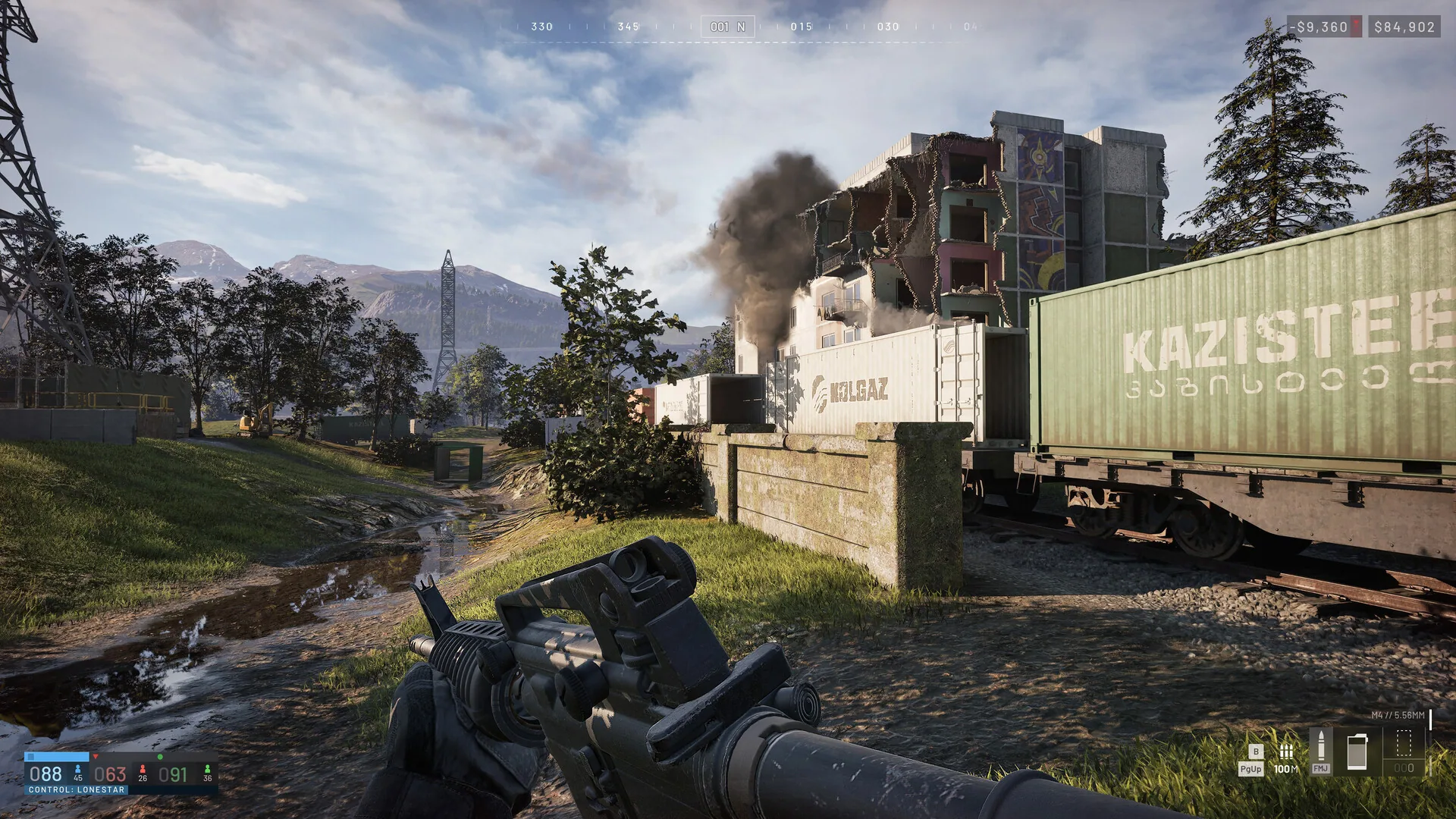
Control Zone is a randomized objective area described as 2x2 km, inside a wider 256 km² battlefield. A match can involve up to 100 players across three teams. Teams score through majority control of the zones, and the first team to reach 100 points wins. These facts establish the public boundary; they do not provide a complete list of maps, spawns or point intervals.
WARDOGS is publicly distinguished from Battle Royale and Extraction Shooter positioning. Its official language instead emphasizes tactical gunplay, combined arms, construction, destruction and player choice. A Steam announcement connects Control Zone’s evolution with King of the Hill inspiration. Those terms explain what the product is being described as, not a license to import another game’s complete rules.
Local Voice Chat is part of the confirmed system language. Proximity is therefore a useful coordination constraint: tell nearby teammates what route, revive, transport or build action matters next. That makes a large match readable even when the full player count is not visible.
Cash, roles and battlefield language
Players begin with 10,000 dollars in the public description. Persistent Cash can support life, equipment, rescue, transport and objective choices, while Hot Zone is identified as a double-cash opportunity. The exact price table is not part of the current record, so a player should judge a spend by the action it creates rather than by an assumed store or progression model.
The role glossary is deliberately broad. Infantry and observation, support and revival, transport and piloting, building and engineering, and objective or cash play are ways to contribute rather than confirmed fixed classes. Vehicles include helicopter transport, Littlebird light air transport, Tank ground fire and Artillery Tank long-range fire. The role pages connect each term to a practical team task.
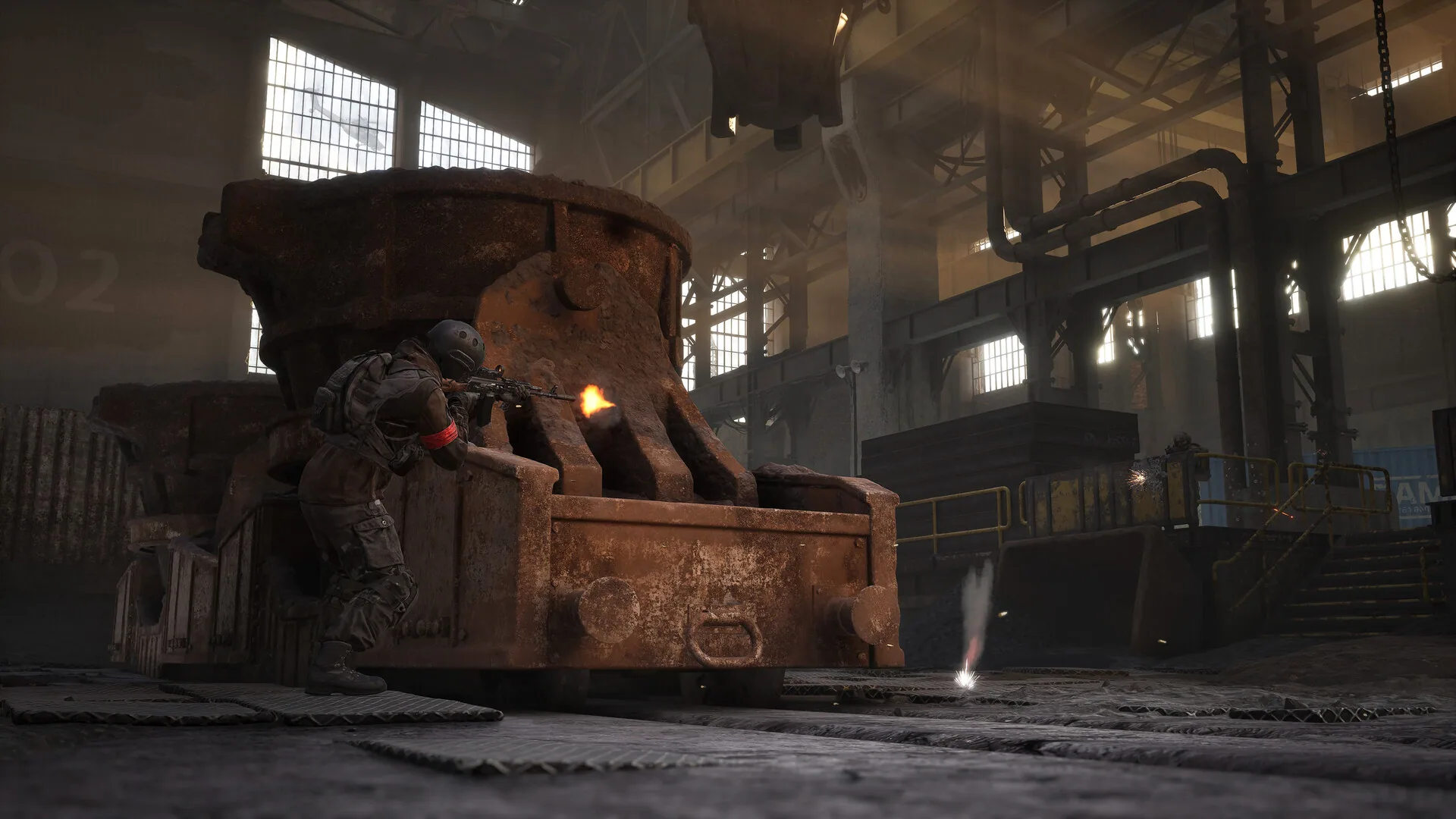
FOB means a buildable forward operating position in the official product language. Combined Arms puts infantry, vehicles and battlefield tools in the same scene. Destruction can alter routes, while construction can create a new place to coordinate. Together those terms explain why the map is more than a background texture.
What is planned and what is observed
Black Market & Vault and Player Skills & Challenge System are listed as planned directions in the Early Access & Beyond public material. They should not be read as a current skill tree, a confirmed vault economy, or a list of unlock costs. The Progression Brief keeps those labels separate from the match systems that have concrete public facts today.
Feedback-driven iteration is an observed part of the public development trail. Official updates about feedback, level design and performance show a process of discussing and adjusting the product. That history can help a player understand why a pre-release snapshot changes, but it does not forecast the exact shape of the next build.
When a term in a news post sounds more specific than the structured record, keep the official wording and follow the dated source. Field Notes provides the timeline, while the Steam page and Team17 product material provide current access and product language.
How to use the glossary in a match
If a teammate says “zone,” connect it to majority control and the first-to-100 finish. If someone asks for a FOB, connect the request to a forward position that supports a real approach. If a player calls Hot Zone, read the term as a double-cash risk rather than an automatic objective. If a pilot offers transport, ask which group needs to arrive and what task follows the landing.
This language keeps the squad’s callouts linked to the game’s public systems. It also makes the manual easier to browse: Control Zone owns the score, Cash Ledger owns the resource exchange, Combined Arms owns movement and fire, and Squad Roles owns contribution patterns. The glossary supplies the short bridge between those pages.
When the current product state changes, check the release date and official news before assuming a term has gained a new rule. The archive is useful because it tells you when an explanation entered the public trail.
OFFICIAL RECORD TRAIL
Use a term as a call to action: a clear word should tell the squad what to do next.